Saturday, October 20, 2018

Bundala National Park - Bird watchers paraidse

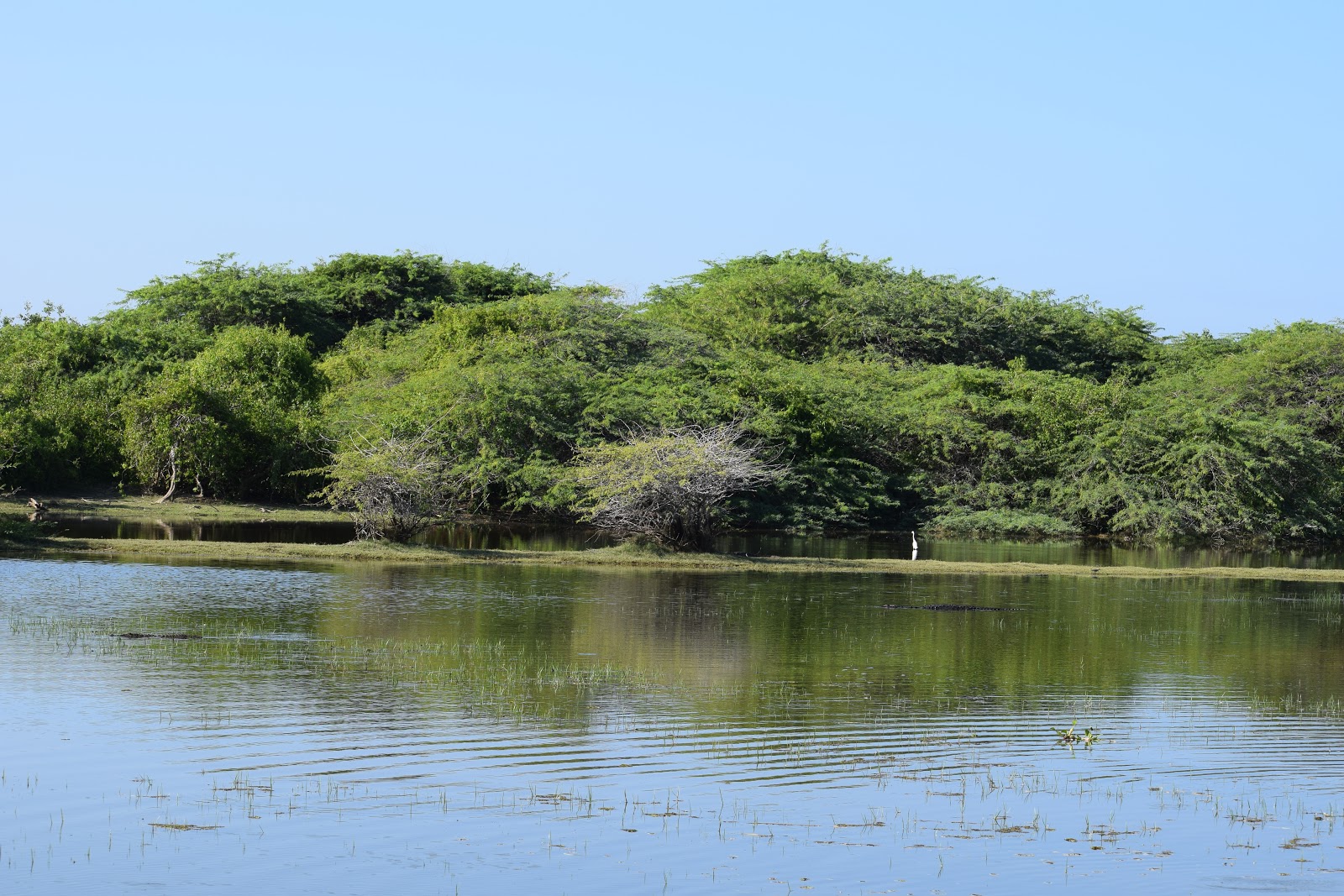
Bundala National Park is an internationally important wintering ground for migratory water birds in Sri Lanka harboring 197 species of birds. It was declared a Wildlife Sanctuary on 5th December 1969, and was upgraded to a National Park on 4th January 1993 with a land area of 6,216 hectares. The park was re-gazetted in 2004 and the original park was reduced to 3,698 hectares. In 1991, Bundala became the first site in Sri Lanka to be designated a Ramsar Wetland. In 2005, Bundala was declared a Man and Biosphere Reserve by UNESCO. In January 2006, an area adjacent to Bundala covering an area of 3,339.38 hectares was declared as the Wilmenna Sanctuary.
The Bundala National Park has been identified as an outstanding important bird area in the South Indian and Sri Lankan wetlands. 324 species of vertebrates have been recorded in the national park, which include 32 species of fish, 15 species of amphibians, 48 species of reptiles, 197 species of birds and 32 species of mammals. 52 species of butterflies are among the invertebrates. The wetland habitats in Bundala harbors about 100 species of water birds, half of them being migrant birds. Of the 197 avifaunal species 58 are migratory species.
A few Asian elephants still inhabit the forests of Bundala. Other mammals seen in the park are toque macaque, common langur, jackal, leopard, fishing cat, rusty-spotted cat, mongoose, wild boar, mouse deer, Indian muntjac, spotted deer, sambar, black-naped hare, Indian pangolin and porcupine.


Friday, October 19, 2018

Udawattekele Forest Reserve - Kandy


Kandy is considered as one of the main and historically important cities in Sri Lanka. In 1371 King Wickramabahu established his kingdom and named this city as “Senkadagala” in remembrance of the Brahmin called “Senkada” who lived in a rock cave in Udawattekele forest. Thereafter all the kings who ruled took appropriate measures to conserve “Udawattekele” forest and regarded it as a part of the Royal Palace.  This resulted in declaring the forest as a property of the crown and a restricted zone for the public. (Known as Thahansi Kele) The Royal family used this as a pleasure garden. During foreign invasions and wars, this forest helped the royals to retreat and hide themselves and also as a passage for them to flee to other safer areas.


Bio Diversity
           
Udawattekeleforest being situated in the hill country within the intermediate climatic zone, the species combination has been complemented by both wet and dry zone species. Studies reveled that there are about 400 species of plants inclusive of herbs, ferns and orchids. The park is mainly covered with some introduced tree species, while the area around the lake is dominated by exotic Mahogany trees. The native liana called “Wewal” and other exotic creepers provided the forest a breathtaking beauty.

The rich vegetation of the forest is home to many wild animals. The park hosts 80 bird species including endemic birds like Sri Lankan Myna, Layard’s Parakeet, Sri Lankan Horn bill, Yellow fronted barbet etc. Apart from this 15 species of mammals, 32 species of butterflies and several species of reptiles and amphibians.

Lady Horton Drive

            
This 3 K.M. long road was constructed in 1834 by the governor Wilmot Horton and name after his beloved wife as a remembrance and it is the first and main road passing through Udawattekele. Among the few other smaller walks, which branch off from the main road. Lovers walk encircle the Royal Pond. Lady Gorden’s drive which was constructed by governor Gorden in 1881. This track ideal for bird watching, many species including Fish Owl can be seen at all times of the day.

Royal Pond

According to the legendary information it is believed that the pond located within the Udawattekele forest was used by the Royal family for bathing purpose. This pond is one major water source of Kandy Lake.

Giant Bamboo

This large bamboo tree called Giant Bamboo is an introduced species for ornamental purpose which is native to Southeast Asia. It can attain a height of about 35 meters and a diameter of about 35 centimeters.

Kodimale (Flag point)
            
There is a ridge-way trekking leading to a point which is about 550 meters high from the sea level. This is the highest peak within the Udawattekele forest. During the period of kings’ rule, the national flag had been hoisted at this point. 

City view point

This place provides fantastic view of the Kandy city and Lake. The close view of Hantana and Alagalla rocky mountains also can be seen.

Hermitages and Caves
            
There are two hermitages located within the forest names “Senanayake Aramaya” and “German Temple”. They function as meditation centers. One rock cave named “Chitta Visuddhi lena” also used for meditation by Buddhist monks. 

Puss-wel (Giant Liana)

A giant liana called Puss-wel which is about 200 years old and spreading over an area of nearly 2 hectares can be found within the Udawattekele forest. In spite of its enormous length, it carries a large pod which is nearly 5 feet long.  

Ironwood Forest
            
Ironwood tree which is locally called “Na” is the national tree of Sri Lanka which is belongs to the family Clusiaceae. A patch of forest consisting of this species are found within the forest which is believed to be planted in 1926. It has beautiful foliage consisting of bright red young leaves and fragrant white flowers.  


https://www.attractionsinsrilanka.com/travel-directory/alagalla-mountain-range/

Thursday, October 18, 2018

Asian Elephants Gathering - One of the top 10 wildlife spectacles in the world...

Every year the Gathering takes place on the receding shores of the Minneriya Lake, in the North Central Province of Sri Lanka. This is one of the most unforgettable and fantastic events in the international calendar. The Gathering begins around June and peaks during the months of August and September. 

As the dry season fastens its grip on the dry lowlands, leaves wither and fall in the dry monsoon forests, and waterholes evaporate into cakes of cracked and perched mud. The Elephants must move on in search of food and water. They converge onto the receding shores of Minneriya Lake - now called this as Minneriya National Park. Elephants are surprisingly difficult to count. Normally on an evening at Minneriya Elephant count may be around 250-300. It starts to tail off in October with the onset of the North-east monsoon. This is a seasonal viewing in the dry season of large numbers of elephants form a population that is resident in the area, which gather on the lake bed. Its not a migration of elephants.

The Gathering at Minneriya National Park is a wonderful opportunity for both wildlife enthusiasts and casual travelers to observe the social dynamics of elephants. 


Friday, March 17, 2017

Devils Stair Case - Hikers Paradise in Sri Lana

The track through the Devils Staircase is one of the most popular hiking and jeep tracks in the hills of Sri Lanka. The difficulty levels and the spectacular view of the green mountains of Sri Lanka has made this a hikers paradise but only the most ardent hikers will undertake this 17 km hike.
Generally hikers choose the Bambarakanda Rest near Bambarakanda Ella Falls  as the starting point to the journey if they wish to start the journey from this end. This trail goes over old dilapidated estate roads through many estates.  This trail ends on the Ohiya – Horton Plains road around the halfway distance from Ohiya Railway Station to the Horton Plains Entrance.
There are no markers along the route, therefore it’s advised to use a guide if attempting the journey for the first time. The route has number of folks and they could easily divert you from the original path.  The trail is 15 km long from Bambarakanda and would take approximately 7 hours to complete the hike.
The two most popular points on the route is the “V cut”, a channel cut through the hill to allow the road to pass through. You will come across this after entering the Udaveriya estate.

Passing this, the road will go across a stream which creates the tallest fall in the country, the Bambarakanda Falls.